Why no boats and £1-a-pint will solve NOTHING
2/15/20262 min read

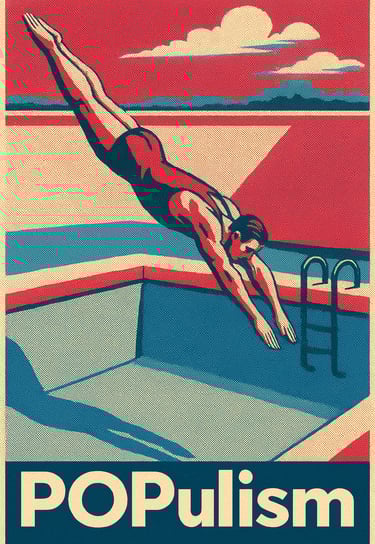
Alastair Campbell once defined populism as “like diving headfirst into an empty swimming pool because you’re angry that there’s no water in it.” In essence, it’s about taking something you can get people angry about, but which, when delivered, will likely hurt them rather than help them.
This is exactly what Reform UK are about. It’s the globally successful model of short-sighted politics they are hoping to use to sneak into power in our country.
If you get talking to me on this subject, you’ll hear me come back to this same point — and it’s because it really winds me up. If you are tempted by Reform UK and what they are telling you, then you are getting angry about the wrong things.
Imagine that from tomorrow onwards, no more illegal immigrants arrive in inflatable boats or in the back of lorries. Imagine it’s pound-a-pint permanently in all pubs. What do you actually think would become discernibly better about the things around you? I believe that for 99% of us, very little — if anything.
I have no issue with people feeling frustrated or angry. I feel frustrated and angry too. But I’m less bothered about the cost of a product like beer, sold by a privately owned business and entirely optional to purchase, than I am about access to responsive healthcare and education; about child poverty; about the lottery of the family a child is born into.
Those who know me know I love a pint. But for a serious political party to focus on one particular private business over any other says it all about the lack of breadth that party has. Where is a credible plan for health, education, the Treasury, defence, international relations — the things we take for granted that the grown-ups will look after? The only positive is that Farage is not so arrogant as to avoid admitting this himself.
The way politics is done — and elections are fought and won — has changed. I get that and I understand it. Reform UK and the Green Party get more media airtime than most, despite holding less than 6.5% of the seats in Parliament, and many of those weren’t even elected under their current party banners. That’s because they have learned how to play the modern game.
People no longer have the attention span to read newspapers (I doubt you’re even still reading this). We like our information short, sharp and colourful. So even if you don’t agree with those rules of engagement, other parties need to adapt if they wish to remain relevant.
But I do not want to see populist one-liners trying to turn person against person, or mud-slinging at other parties. I want to see hopeful messages that show what a party would actually do to make things better for the 99% — the people who aren’t standing on the cliffs of Dover drinking their £1 pint.